
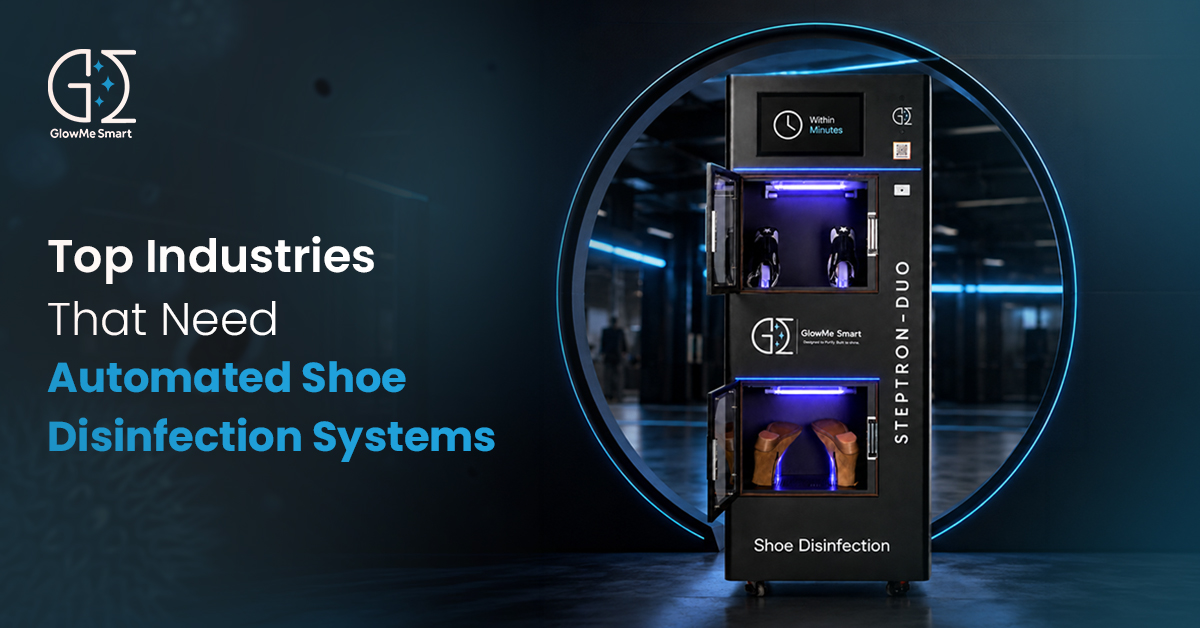
Automated Shoe Disinfection Systems are becoming important for facilities where footwear moves from outdoor, public, or dirty zones into cleaner indoor areas. Shoes pass through parking spaces, washrooms, roads, canteens, shop floors, wards, gyms, lobbies, and transport points before entering shared interiors. This article explains the industries that need shoe disinfection the most and why footwear hygiene should be handled at entry points, not only after floors become dirty. GlowMe Smart StepTron supports this need through kiosk-based shoe hygiene built for commercial spaces, heavy footfall, and Indian operating conditions.
The goal is simple: identify where shoe disinfection delivers the highest value. Some industries need it for infection-sensitive movement, some for production discipline, and others for premium customer experience. In each case, footwear hygiene works best when it is placed where people naturally pause before entering important indoor areas. That is why the right location, industry fit, and machine process matter as much as the technology itself in daily use across busy commercial spaces with steady footfall.
What Are Automated Shoe Disinfection Systems?
Automated Shoe Disinfection Systems are kiosk-based machines that treat footwear through a controlled cycle before users enter cleaner areas. A person places their shoes in the sterilization unit and starts the disinfection cycle. Once the system has treated, dried, and cooled the shoes, the user retrieves the pair. It forms a closed cycle that’s independent of manual cleaning, which would have to be carried out when each person gets to the room.
Usually, a UV Shoe Disinfection unit covers just the exteriors, which means that a user will need to open each shoe to treat the interior areas as well. These machines do more than just regular surface disinfection. They also offer ozone disinfection, steam deodorization, drying, and cooling. Even with all those features, shoes can still smell bad. A single person may find it hard to clean them well if they only have one disinfection method.
- Closed chamber: Keeps active treatment inside the machine and supports safer use near public movement points.
- Repeatable cycle: Gives every pair of shoes the same process during peak hours and shift changes.
- Better entry control: Treats footwear before dirt, odour, and moisture move deeper into the facility.
- Staff relief: Reduces repeated spraying, wiping, checking, and drying by housekeeping or facility teams.
Why Do Hospitals Need Shoe Disinfection Systems?
We need to Shoe disinfection system for hospitals. Shoes carry dirt into indoor spaces. This includes staff entries, visitor zones, waiting areas, support corridors, and areas near care. Hospital footwear sanitization solutions are often cleaned, but shoes still pick up dirt and grime as they move around.
The shoe decontamination system works best at entrances. Use it where staff enter, in visitor areas, changing zones, service corridors, and controlled access routes. They support hygiene discipline before movement reaches sensitive areas.
- Staff entries: Help doctors, nurses, technicians, and support teams treat footwear before entering work areas.
- Visitor zones: Add visible hygiene support where patients, attendants, and visitors enter shared hospital spaces.
- Support corridors: Reduce footwear transfer between storage, maintenance, housekeeping, and care-linked movement routes.
- Waiting areas: Support a cleaner floor presentation where patient families and visitors spend longer periods.
Which Industrial Facilities Need Shoe Sanitization?
An Industrial Shoe Sanitization Machine is most useful in places like loading zones, production floors, warehouses, locker rooms, canteens, and controlled areas. Employees walk through these zones, making sanitation important. Industrial settings, such as manufacturing and food processing, require strict footwear regulations. Shoes can pick up dust, mud, oil, moisture, and waste from various areas.
At industrial sites, the cleanliness of shoes isn’t solely a matter of looks. It helps keep the workplace clean. This helps staff move more efficiently, improves floor discipline, and reduces manual effort during shift changes.
- Plant manufacturers and all types of goods makers: You can reduce dust and dirt from workers walking in plant areas, work zones, machining sections, and dispatch areas.
- Cleaner Footwear in a Food Processing Plant: A worker’s hygiene step before entering food areas won’t cause harm. This may ease public concerns.
- Pharmaceutical plants: Using footwear controls can help protect areas where cleanliness and process discipline are essential.
- Lab rooms: Check shoe hygiene before technicians and staff enter testing or sample rooms. Cleanliness is key.
Stockpiling, storing, and picking goods are the three functions of the warehouse. To control shoe traffic between docks, storage aisles, picking, and office areas, use a footwear inspection point.
How Do Gyms, Hotels, Offices, and Public Spaces Benefit?
Gyms, hotels, corporate offices, IT parks, malls, airports, schools, and residential communities receive constant footfall from many directions. These locations may not be as controlled as hospitals or factories, but they depend heavily on cleanliness, comfort, smell control, and user confidence.
Automated hygiene technology makes shoe hygiene easier because it fits into the entry flow. When placed in parking lots, lobbies, locker rooms, clubhouses, staff entrances, and shared amenities, the machine becomes part of the movement.
- Gyms: Protect workout floors, locker rooms, studios, and indoor sports areas from daily footwear movement.
- Hotels: Support premium hygiene near spas, corridors, staff entrances, valet points, and guest arrival zones.
- Offices: Reduce dirt transfer from parking areas, public transport, cafeterias, and shared building entrances.
- Airports and malls: Serve high-footfall zones where visitors move from outdoors into polished indoor spaces.
- Residential communities: Support clubhouses, gyms, lobbies, indoor courts, and shared family amenity areas.
GlowMe Smart supports commercial shoe hygiene through StepTron, a shoe disinfection kiosk built for facilities that need visible, repeatable, and dry footwear treatment. StepTron combines UV-C, ozone, steam treatment, deodorisation, 360-degree warm air drying, and active cooling in one system.
For Indian facilities, this matters because dust, heat, monsoon moisture, heavy movement, and staff limitations make manual shoe hygiene difficult to maintain. GlowMe Smart helps businesses place hygiene where movement begins, not after floors already show the problem.
- Commercial fit: StepTron is suited for hospitals, factories, offices, hotels, gyms, malls, and communities.
- Dry return: Warm-air drying and active cooling help users collect footwear without damp discomfort.
- Visible trust: A kiosk shows visitors, staff, and customers that entry hygiene is taken seriously.
- Practical deployment: The system can support facility use, premium service, or controlled entry-point hygiene.
Which Industry Should Install First?
The first industries to install shoe disinfection systems should be those with heavy footfall, controlled interiors, hygiene-sensitive operations, or premium customer experience. Hospitals, food processing units, pharmaceutical spaces, manufacturing sites, gyms, hotels, offices, airports, malls, schools, and luxury communities all have strong reasons to act.
GlowMe Smart exists to make footwear hygiene easier for real commercial locations. StepTron helps facilities reduce manual pressure, improve entry-point cleanliness, and build a hygiene standard users can see and follow. For businesses planning long-term workplace contamination prevention, automated shoe disinfection is a practical first step.
Contact GlowMe Smart to explore Automated Shoe Disinfection Systems for hospitals, industries, workplaces, hotels, gyms, malls, and public spaces across India.
FAQs
1. What are automated shoe disinfection systems?
Automated shoe disinfection systems are kiosk-based machines that treat footwear through a controlled cycle before users enter cleaner indoor spaces.
2. Which industries need automated shoe disinfection systems most?
Hospitals, food processing units, pharmaceutical facilities, manufacturing units, gyms, hotels, offices, airports, malls, schools, and residential communities benefit most.
3. Why do hospitals need a shoe disinfection system?
Hospitals need footwear hygiene because staff, visitors, and support teams move between outdoor spaces, service corridors, waiting areas, and care-linked zones.
4. How does a UV shoe disinfection system work?
A UV shoe disinfection system uses UV-C light inside a closed chamber to support the treatment of visible footwear surfaces.
5. What is an industrial shoe sanitization machine?
It is a commercial machine that treats footwear before workers enter production floors, warehouses, clean zones, or controlled workspaces.
