
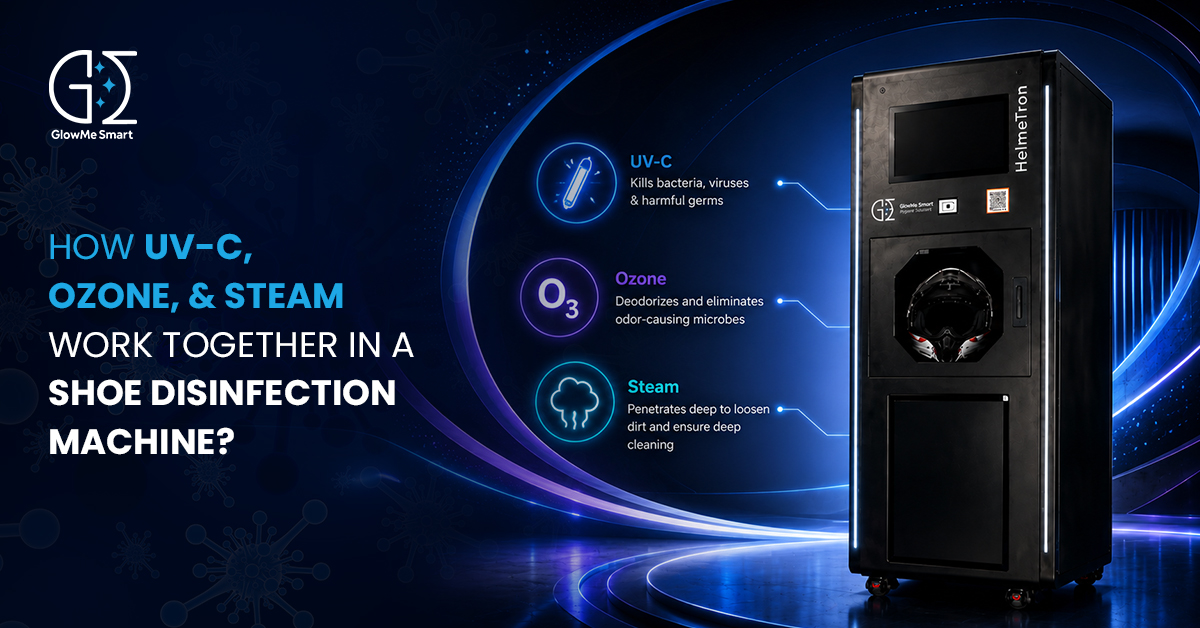
The UV Shoe Disinfection Machine solves a cleanliness issue that many spaces overlook. Shoes bring dirt into every room before people do. Experts say shoes bring in dirt. This dirt comes from paved paths, parking lots, hotel entrances, employee areas, and shared doorways. It ends up in indoor spaces. The microscopic contaminants that every footwear pair brings inside are not removed by a cleaning tool for floors. Because of this situation, cleaning footwear requires more than a simple floor covering or a liquid container that sprays. Many believe the UV Shoe Disinfection Machine works using several methods. It combines UV-C, ozone, and vaporized water treatment. It also removes scents, extracts moisture, and reduces temperature, all in one sealed system.
Why Does Shoe Disinfection Need More Than One Technology?
Shoes have uneven surfaces and multiple layers, so they are very sensitive to different materials. Small grooves exist on the walking surface of the shoes. Experts claim that the interior of shoes stores liquid and bad smells. While people usually wipe shoes with a cloth, these stages provide a better professional system for shoes.
- Uneven surfaces: Shoes have uneven surfaces and multiple layers, so they are very sensitive to different materials.
- Walking surface: Small grooves exist on the walking surface of the shoes.
- Shoe interiors: Experts claim that the interior of shoes stores liquid and bad smells.
- Ultraviolet rays: Ultraviolet rays perform better when they reach parts of shoes that are visible.
- Gaseous ozone: Gaseous ozone is allowed to enter tiny gaps that exist within shoes.
- Hot steam: Application of hot steam makes sure that many parts of the materials are touched during the cleaning.
- Drying period: Water is stopped from staying inside the shoes when the drying period begins.
- Professional system: While people usually wipe shoes with a cloth, these stages provide a better professional system for shoes.
How Does UV-C Work Inside a Shoe Disinfection Machine?
UV-C light disinfects surfaces by damaging the genetic material of microorganisms. It works best with enough contact time. Within a shoe chamber, the seen footwear surfaces are cleaned by the UV-C light for immediate care. UV-C light is helpful when it reaches the target area without any blockages.
- Contact time: UV-C light works best with enough contact time.
- Target area: UV-C light is helpful when it reaches the target area without any blockages.
- Contact restriction: UV-C light works through contact.
- Concealed surface: When a surface stays concealed by a crease, low sole pattern, or dark inside corner, UV-C light might not reach that surface correctly.
- Shoe chamber shadows: Cleaning efficacy is restricted by the presence of shadows within the shoe chamber.
- Quality apparatus: Experts claim that a quality apparatus must not rely on UV-C light only, even though UV-C light performs some cleaning functions.
What Role Does Ozone Play in Shoe Disinfection?
Ozone is useful because it behaves differently from light. As a gas, it can move into grooves, seams, tread lines, and enclosed shoe areas where direct light exposure may be limited. It helps address odour sources and difficult-to-reach spaces.
Ozone must also be treated with care. It should remain inside the chamber during operation and clear before users collect footwear. A good kiosk design manages ozone responsibly instead of releasing it into occupied spaces.
How Does Steam Shoe Disinfection Technology Help?
Steam shoe disinfection technology supports the cycle by adding contact treatment across material surfaces. In GlowMe Smart StepTron, the steam stage uses vaporised formulated shoe disinfectant liquid, not plain water. Steam treatment helps address contact areas, odour-prone surfaces, and material zones needing more than light exposure. The cycle then moves into deodorisation, warm air drying, and fan-based cooling so footwear exits dry and wearable.
How Do UV-C, Ozone, and Steam Work Together?
The real value is not in listing technologies. It is in sequencing them correctly.
|
Stage |
What It Does | Why It Matters |
| UV-C | Treats exposed shoe surfaces |
Supports surface-level disinfection |
|
Ozone |
Moves into grooves and inner spaces | Reaches areas light may miss |
| Steam | Adds vaporised liquid contact treatment |
Supports liner, sole, and upper hygiene |
|
Deodorisation |
Targets odour-causing residue | Improves post-cycle freshness |
| Drying | Removes leftover moisture |
Returns footwear ready to wear |
|
Cooling |
Brings temperature down |
Improves user comfort after treatment |
This layered approach makes the machine more useful for real footwear, not just flat test surfaces.
What Are the Benefits of a UV Shoe Disinfection Machine?
The Benefits of a UV shoe disinfection machine are strongest where footwear movement is constant and manual hygiene is difficult to control.
- Consistent process: Each cycle follows the same order, reducing staff dependency during busy hours and shift changes.
- Better entry hygiene: Shoes can be treated before entering lobbies, wards, studios, offices, and work zones.
- Odour control: Deodorisation and drying reduce the damp smell that often remains inside footwear.
- Dry return: Warm air drying helps users collect shoes without waiting for moisture to clear.
- Visible trust: Customers, employees, and guests can see the facility has invested in shoe hygiene.
Which Industries Benefit from Shoe Disinfection Machines?
Which industries benefit from shoe disinfection machines? Any business where footwear crosses from outdoor or public areas into sensitive interiors should consider them.
- Gyms: Need shoe hygiene near workout floors, locker rooms, and studios.
- Hospitals and clinics: Need controlled movement at staff entries, visitor zones, and support areas.
- Hotels and resorts: Can place kiosks near spas, corridors, staff entrances, and arrival points.
- Corporate offices and IT parks: Can use them where employees arrive from parking areas and public routes.
- Manufacturing units: Reduce dirt movement from shop floors, loading areas, worker zones, and machine-heavy sections.
- Food processing plants: Support cleaner footwear movement before staff enter handling, packing, storage, or production areas.
- Pharmaceutical facilities: Help protect controlled zones where footwear hygiene can affect cleanliness and process discipline.
- Labs: Add a hygiene checkpoint before technicians enter testing rooms, sample areas, or controlled workspaces.
- Airports: Manage footwear hygiene across staff entries, lounges, transport zones, and high-footfall passenger areas.
- Malls: Offer visible shoe hygiene support near entrances, parking links, premium corridors, and shared customer spaces.
- Schools: Help reduce outdoor dirt transfer from playgrounds, buses, corridors, and classroom entry points.
- Luxury residential communities: Support cleaner movement through clubhouses, lobbies, gyms, indoor courts, and shared amenities.
Why Choose GlowMe Smart as a Shoe Disinfection Solutions Company in India?
GlowMe Smart is a Shoe disinfection solutions company in India focused on kiosk-based hygiene for commercial use. Its StepTron system is built around UV-C activation, ozone treatment, vaporised shoe disinfectant liquid steam, essence deodorisation, 360-degree warm air drying, and fan-based cooling.
The brand understands Indian operating conditions: dust, heat, humidity, monsoon moisture, high footfall, and facilities that cannot assign staff to every hygiene task. StepTron gives operators a repeatable system that supports hygiene without slowing daily movement.
What Should Buyers Check Before Installing?
- Enclosed operation: UV-C and ozone stages should remain inside the chamber during active treatment.
- Dry footwear: Shoes should exit dry enough for immediate use, not damp or uncomfortable.
- Service support: Liquids, lamps, nozzles, airflow parts, and sensors need planned maintenance.
- Location planning: Install the kiosk where users naturally pause before entering sensitive spaces.
- Material suitability: The cycle should support common commercial footwear without harsh handling.
How Does GlowMe Smart Help Modern Facilities Improve Shoe Hygiene?
A shoe disinfection machine should not be sold as a miracle device. It is a structured hygiene layer. Floors still need cleaning. Staff still need hygiene training. Controlled environments still need their own protocols. But footwear has been ignored for too long in spaces where cleanliness is visible and expected. GlowMe Smart StepTron gives businesses a practical way to address that gap. By combining UV-C, ozone, steam treatment, deodorisation, drying, and cooling, it turns shoe hygiene into a process people can actually use.
Make footwear hygiene visible, repeatable, and easier to manage. Contact GlowMe Smart to explore StepTron shoe disinfection machines for your facility, industry, and footfall.
FAQs
1. How does a UV shoe disinfection machine work?
It places footwear inside a closed chamber and runs UV-C, ozone, steam, deodorisation, drying, and cooling stages.
2. Is UV-C shoe disinfection safe?
It is safer when UV-C works inside a closed chamber with controls preventing direct exposure.
3. What are the benefits of a UV shoe disinfection machine?
Benefits include consistent hygiene, odour control, lower staff effort, visible trust, dry return, and better entry cleanliness.
4. What is steam shoe disinfection technology?
It uses vaporised treatment to support hygiene across shoe surfaces, inner areas, soles, and odour-prone zones.
5. Which industries benefit from shoe disinfection machines?
Gyms, hospitals, hotels, offices, plants, labs, airports, malls, schools, and residential communities benefit from structured shoe hygiene.
6. Why choose GlowMe Smart for shoe disinfection?
GlowMe Smart provides StepTron kiosks for Indian facilities needing automated, dry, visible, and repeatable shoe hygiene.
