

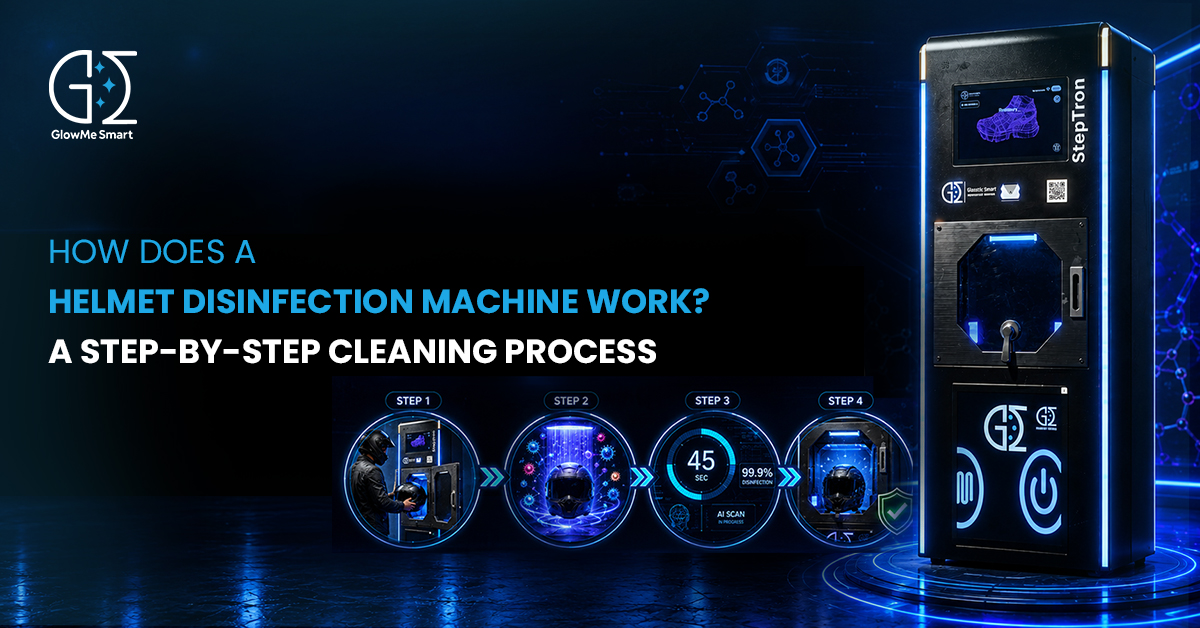
The helmet disinfection machine cleaning process shows how a kiosk cleans a helmet. This happens from the moment the helmet enters until it dries. Helmets gather sweat, dust, scalp oils, odors, and moisture daily. This happens because helmets are often worn. GlowMe Smart makes HelmeTron. It is for fueling areas, transport hubs, sales spots, workplaces, and busy commuter zones. These places in India need reliable helmet hygiene solutions in India. This operation goes beyond simple surface cleaning. It’s a careful, repeated method. It focuses on interior materials, securing bands, soft cushioning, and air passages.
What Is a Helmet Disinfection Machine?
The helmet disinfection machine runs a steady cleaning cycle for the helmet. Many think the helmet disinfection machine uses UV-C light, ozone, steam, and atomized liquid. These features help ensure hygiene by deodorizing, drying with warm air, and cooling. The helmet disinfection machine uses a uniform procedure in each session. This ensures reliability.
How Does the Automated Helmet Disinfection Process Start?
The automated helmet disinfection process starts when the rider places the helmet inside the chamber. The door closes, the selected cycle begins, and the active treatment stays inside the unit.
- Correct placement: The helmet is positioned so the liner, straps, and shell receive treatment.
- Closed chamber: UV-C, ozone, steam, and mist stay away from people nearby.
- Cycle choice: Standard, enhanced, or deep modes match use frequency and hygiene need.
What Happens During UV Helmet Disinfection?
UV helmet disinfection uses UV-C light inside the chamber to support surface-level microbial inactivation. UV-C is used in germicidal applications because it can damage microbial DNA or RNA when enough light reaches the target area. But helmets are not flat. Curves, vents, padding, and folds create shadowed zones. That is why UV-C works best as one stage in a wider cycle.
Why Add Ozone, Steam, and Liquid Treatment?
Helmet interiors hold sweat and odour in materials that are difficult to clean by hand. Ozone helps reach enclosed areas. Steam and atomised liquid support treatment across liner and strap surfaces. Deodorisation reduces odour-causing build-up instead of covering it with perfume. Return a helmet that feels clean, dry, and ready to wear.
Step-by-Step Helmet Disinfection Machine Cleaning Process
A helmet disinfection machine works best when every stage has a clear purpose. The process should not stop at surface exposure. It should treat the inner liner, straps, shell, vents, and padding, then return the helmet dry enough to wear immediately. The table below explains how a complete helmet disinfection cycle moves from placement to collection.
|
Step |
What Happens | Why It Matters |
| 1 | Helmet enters the chamber |
Starts contactless treatment |
|
2 |
Door closes securely | Keeps active stages enclosed |
| 3 | UV-C activates |
Supports surface disinfection |
|
4 |
Ozone and mist treat deeper areas |
Reaches folds and liner spaces |
|
5 |
Deodorisation runs | Reduces odour-causing residue |
| 6 | Warm air drying begins |
Removes moisture from padding |
|
7 |
Cooling completes the cycle |
Returns a wearable helmet |
What Are the Helmet Disinfection Machine Benefits?
Experts say the helmet disinfection machine benefits help the most in places where people wear helmets every day. It’s especially useful when helmets are shared or taken through public areas. Petrol stations, fleets, corporate parking, and service centers need a reliable process. This ensures riders trust the cleanliness.
- Better comfort: Because liners become dry and fresh, the helmet disinfection machine decreases bad odor and wetness. Keeping the liners clean with the helmet disinfection machine reduces skin-contact discomfort for users.
- Less staff work: Working people skip spraying and wiping. The helmet disinfection machine does this job automatically. It is believed by experts that the helmet disinfection machine stops employees from checking and drying every helmet by hand.
- Consistent output: As the location gets busy, every rider still gets the same quality treatment from the helmet disinfection machine. The helmet disinfection machine treats every helmet the same way.
- Visible hygiene: Many people believe that a kiosk demonstrates the high standards of a specific location. Helmet care is shown to be a priority for the establishment by the helmet disinfection machine, so that riders feel respected.
- Revenue option: Financial gains come from pay-per-use cycles. The helmet disinfection machine provides a paid service.
Why Is Drying the Final Proof of Cleaning?
A helmet that comes out damp is not ready. Moisture inside the liner feels uncomfortable and can bring odour back quickly. Drying is where many basic systems fail. HelmeTron uses 360-degree warm air drying so the liner, straps, padding, vents, and shell interior are dry before collection.
How Does GlowMe Smart Build This for Indian Use?
Indian riding conditions are tough: heat, dust, humidity, monsoon moisture, long commutes, and high two-wheeler usage. A helmet machine must work in real rider locations.
GlowMe Smart combines UV-C, ozone, steam, PureLine atomisation, deodorisation, drying, cooling, IoT support, and contactless operation in one kiosk. As a Helmet disinfection solutions company, it focuses on making helmet hygiene easy to repeat at a commercial scale.
What Should Businesses Check Before Installing One?
Businesses should choose a machine by use case, not appearance. The right system should fit rider flow, power access, maintenance, payment, and service support.
- Cycle time: Riders should complete cleaning without delaying regular movement.
- Dry return: Helmets must come back wearable, not damp or uncomfortable.
- Safe enclosure: UV-C and ozone should remain inside the chamber during operation.
- Service support: Liquids, lamps, nozzles, and parts need scheduled maintenance.
- Location fit: Place the machine where riders naturally pause already.
Why Choose GlowMe Smart Helmet Disinfection Machines?
A helmet disinfection machine works best when the process is complete, controlled, and easy to repeat. UV-C alone is not enough if the liner stays damp, the straps remain untreated, or the helmet returns with odour still trapped inside. A proper system should disinfect, deodorise, dry, and cool the helmet before it reaches the rider again. GlowMe Smart delivers this full cycle through an automated kiosk, ensuring consistent hygiene, reduced turnaround time, and improved user trust. Businesses benefit from streamlined operations, while riders enjoy fresher, safer helmets every time they ride.
Reach out to GlowMe Smart for helmet disinfection machines built for riders, fleets, petrol stations, and high-footfall spaces across busy rider stop points and daily routes across India today.
FAQs
1. How does a helmet disinfection machine work?
A helmet disinfection machine places the helmet inside an enclosed chamber and runs UV-C, ozone, steam, atomised liquid, deodorisation, drying, and cooling stages.
2. Is UV helmet disinfection safe?
UV helmet disinfection is safer when it happens inside an enclosed kiosk that prevents direct UV-C exposure to users and nearby people.
3. What is the automated helmet disinfection process?
It usually includes helmet placement, closed-chamber treatment, UV-C activation, ozone or mist coverage, deodorisation, drying, cooling, and safe collection.
4. Can a helmet disinfection machine remove odour?
Yes. Deodorisation and drying help reduce sweat-related odour inside liners, padding, straps, vents, and other contact areas.
5. Where should businesses install helmet disinfection machines?
Best locations include petrol stations, fleet hubs, corporate parking areas, dealerships, rental points, hotels, malls, and rider-heavy zones.
6. What should buyers check before choosing a helmet kiosk?
Check drying quality, safe enclosure, cycle modes, service support, liquid compatibility, IoT options, payment flow, and commercial-use readiness.
