
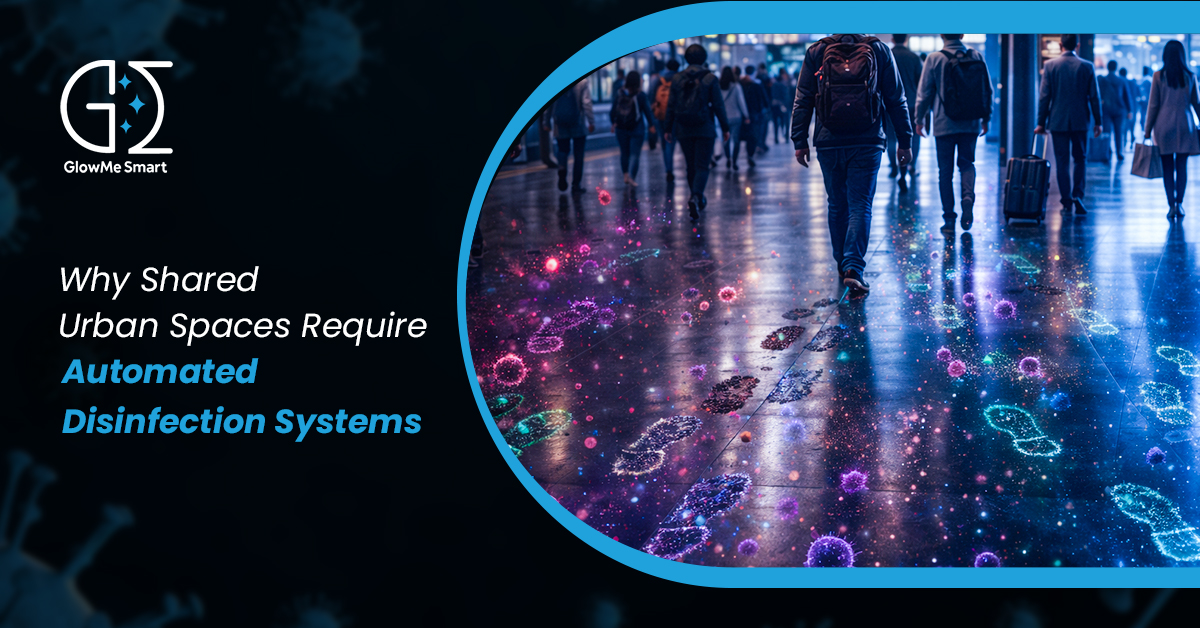
Open spaces in cities, including train stations and business parks, are subjected to an insurmountable stream of people that perpetuates a cycle of recontamination, which cannot be broken even by manual cleaning. Conventional janitorial practices are periodic; they leave large gaps in time during which surfaces that support pathogens are left unclean between cleaning cycles. Automated disinfection systems, on the other hand, offer a 24/7 proactive barrier, which needs no supervision and is automatically activated to remove human error and the logistical limitations associated with human resources.
The systems provide medical-grade sanitation, which keeps up with city life rhythm by incorporating the newest technologies, such as UV-C light and ozone. The UV-C light is successful in inactivating the DNA of bacteria and viruses on the high-touch surfaces, and ozone can reach the areas that are difficult to reach.
This reactive-to-active hygiene shift will ensure that the standards of public health are not influenced by the traffic volume and will eventually create safer, more resilient, and technologically enhanced smart cities.
What are automated disinfection systems?
Automated disinfection systems are automated machines based on technology such as UV-C light, ozone, or dry mist to sterilize human-contact-free items. They are thus designed to be used on their own in an open environment, where their hygiene is kept at all times.
They usually come with sensors to detect when something has been inserted on the inside and software to control the cycle. They offer a consistent degree of hygiene that is not influenced by the various applications or days of the week. This uniformity is essential to the health of the populace.
Why Shared Urban Spaces Require Automated Disinfection Systems?
Common areas, such as cities, should have automated disinfection solutions as they have a continuous flow of people that cannot be cleaned manually. These systems are 24/7 resistant to germs and bacteria without the need for human personnel to use the systems.
The conventional techniques are not able to handle the rate of contamination of public surfaces in busy cities. Technology such as UV-C light and the use of ozone are important so that hygiene is not compromised, irrespective of the number of people that pass through a given place.
Why are shared urban spaces high-risk areas?
Shared urban spaces are dangerous due to the fact that thousands of individuals come into contact with the same surfaces, equipment, and floors daily. This close association predisposes a high chance of spreading the viruses and other environmental bacteria at a very high rate.
Areas such as transport hubs, malls, and lobbies are commonly known as the hotspots of germ transmission. Although all these areas are regularly cleaned by the janitorial teams, a surface may be contaminated again within a few seconds. These gaps need to be sealed by a permanent and automated solution.
Why Cities Need Automated Disinfection Systems?
Shared urban spaces require automated disinfection systems because constant foot traffic makes manual cleaning impossible to maintain. These systems provide a 24/7 barrier against germs and bacteria without needing human staff to operate them. Traditional methods cannot keep up with the speed at which public surfaces become contaminated in busy cities. Using technology like UV-C light and ozone ensures that hygiene remains consistent regardless of how many people move through a location.
GlowMe Smart addresses these critical challenges by providing medical-grade sterilization kiosks that automate high-frequency hygiene for modern commuters and professional environments. By utilizing a Triple Sterilization approach involving UV-C, ozone, and steam, these systems offer a proactive, autonomous solution to public health.
GlowMe Smart Automated Hygiene Solutions
- StepTron automates shoe disinfection through a comprehensive four-stage sterilization and drying cycle.
- HelmeTron delivers 360-degree deep cleaning and deodorization specifically for rider headgear.
- ObjecTron provides touch-free sanitization for electronics and various personal belongings.
- PureLine offers eco-friendly and non-toxic sanitizing refills for all autonomous systems.
How do commercial disinfection machines improve public safety?
The use of commercial disinfection machines is an expedited, proven method to clean personal equipment such as helmets, shoes, and electronics within a few seconds. They provide some degree of deep sterilization, which can not possibly be matched by hand wiping with simple chemicals.
These units enable businesses to provide quality sanitization as a civic service or as an additional feature. They eradicate the need to use human services and see to it that each sterilization procedure is safe.
- Commercial Performance: All articles have the same amount of UV-C exposure and ozone treatment time to evenly kill germs.
- Less Human Error: Machines do not exhaust themselves or leave areas of an item uncleaned, as commonly occurs with hand wiping.
- Proven Health Results: Professional quality technology is used to eliminate 99.9 percent of those pathogens that cannot be removed by regular liquid soap cleaning.
- Safety Log Tracking: Digital systems are used to keep track of all the cycles to give businesses information about the number of people who are staying safe.
By installing a commercial disinfection machine as part of your facility workflow, you will be decreasing the biological burden in common places. All devices delivered by GlowMe Smart make sure that personal equipment is clean during the working day.
What role do public space hygiene solutions play in smart cities?
Public space hygiene solutions are a core part of smart hygiene infrastructure, helping cities manage health risks through data and automation. They integrate with city services to provide cleaner environments for commuters and residents in busy metropolitan areas.
Smart cities use technology to improve the lives of citizens, and automated hygiene is now a priority. These systems help urban planners maintain high standards of cleanliness without increasing the local labor force.
- Internet of Things Integration: Kiosks connect to central networks to alert maintenance teams when disinfectant refills are needed for operation.
- Urban Health Monitoring: Data from these systems helps city officials understand peak usage times and improve hygiene planning.
- Sustainable Resource Usage: Automated cycles use minimal water and electricity, supporting the green initiatives of modern smart city developments.
- Reduced Chemical Runoff: Precise misting technology prevents excess liquid chemicals from entering the city drainage systems during cleaning.
Deploying these technologies creates a safer environment for every citizen navigating the busy city streets. GlowMe Smart supports urban developers by providing scalable hygiene systems that fit into any modern architectural design.
Why are touchless sanitization systems necessary for high-traffic zones?
Touchless sanitization systems are necessary because they prevent users from coming into contact with contaminated surfaces during the cleaning process.
This “zero-contact” approach is the most effective way to break the chain of infection in public settings.
If a user must touch a dirty handle to sanitize their hands or gear, the hygiene process becomes ineffective. Automated sensors ensure the entire journey from start to finish is completely touch-free.
- Motion Sensor Activation: Doors and cycles start automatically when the system detects an item, removing the need for physical buttons.
- Cross-Contamination Prevention: Users never touch the same surfaces as previous people, which keeps the exterior of the machine sterile.
- Ease of Operation: Simple visual cues and automated prompts make the systems accessible to people of all ages and backgrounds.
- Faster Throughput Times: Touchless systems operate quickly, preventing long queues from forming in busy locations like malls or stations.
Modern commuters expect hygiene solutions that are fast, efficient, and entirely safe to use in public. A GlowMe Smart kiosk provides this contactless experience while ensuring a 99.9% kill rate for bacteria.
Comparison Table: Manual vs Automated Public Hygiene
| Feature | Manual Public Cleaning | Automated Hygiene Solutions |
| Operational Hours | Limited by shift schedules. | Available 24/7 without supervision. |
| Consistency | Varies based on staff training. | Programmed for identical results every time. |
| User Experience | Often inconvenient and slow. | Fast, modern, and highly engaging. |
| Pathogen Defense | Targets surface dirt mostly. | Targets bacteria, viruses, and odors. |
| Data Reporting | Manual logs on paper. | Real-time digital usage reporting. |
Table 1 above highlights the clear efficiency gains found when moving from manual janitorial tasks to automated disinfection systems.
Real-World Use Cases for Urban Disinfection
- Disinfection solutions for malls: Large shopping centers use these machines at entrances to sanitize strollers and shopping bags for families.
- Hygiene systems for metro stations: Commuters can quickly sanitize their helmets or gloves during their transit journey through the station.
- Sanitation machines for offices: Corporate buildings place kiosks in lobbies for staff to sanitize phones and badges upon entry every morning.
Why and How Businesses Benefit from GlowMe Smart Systems?
Businesses benefit by reducing health risks, lowering labor costs, and improving their professional brand image in the eyes of the public. These systems provide a verifiable standard of safety that manual methods cannot offer.
Modern businesses need tools that work autonomously to maintain clean environments without constant staff intervention. These machines provide a high-tech service that customers value and trust in their daily lives.
- Lower Operational Costs: Replacing manual wiping with automated machines reduces the long-term cost of labor and cleaning supplies.
- Enhanced Customer Loyalty: People return to businesses that visibly prioritize their health and safety through modern hygiene technology.
- Regulatory Safety Compliance: Digital logs help managers meet local health guidelines and pass inspections with accurate usage data.
- Improved Workplace Morale: Employees feel safer and more valued when they have access to professional-grade sterilization tools.
Investing in modern hygiene infrastructure is a strategic move for any business operating in a shared space. Choosing GlowMe Smart ensures you are providing the highest level of protection for everyone.
Ready to modernize your facility? Contact our team today to learn how to integrate automated disinfection systems into your urban space.
FAQs
1. How do automated systems handle high foot traffic?
They work fast, usually completing a cycle in under 60-120 seconds. This allows for a high turnover of users without forming crowds.
2. Are these systems expensive to maintain?
They are very energy efficient and only require periodic refills of specialized solutions. This makes the long-term cost lower than manual labor.
3. Can they be used in outdoor settings?
Many units are built with durable materials for sheltered outdoor environments like petrol stations, charging hubs, and covered transit platforms.
4. Do they use harmful chemicals for disinfection?
No. They use biodegradable, non-toxic solutions and UV-C light. This combination is safe for personal items and the environment.
5. Where can Automated Disinfection Systems be used?
They are widely used in shared urban environments such as workplaces, gyms, hospitals, public transport, and commercial buildings.
