
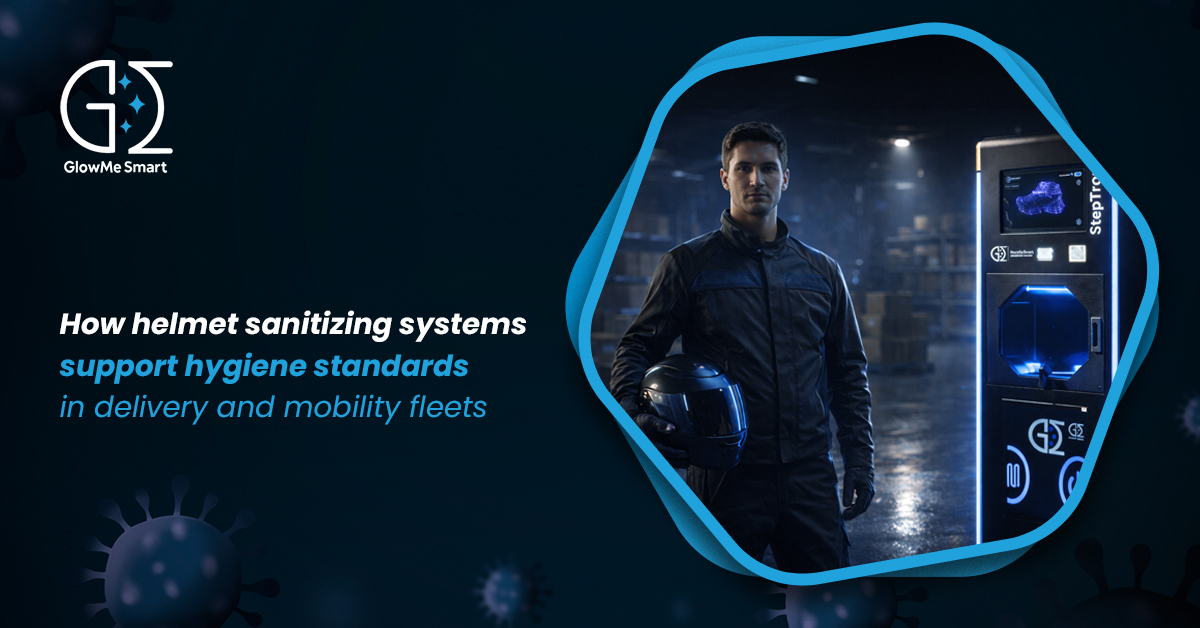
In shared mobility and delivery environments where numerous different people use the same helmet or helmets, helmet sanitation can be overlooked. This article outlines how both cleaning and sanitizing kiosks for helmets function, why a standardized method is essential for keeping helmets sanitary, and how businesses can establish a uniform quality level of hygiene in a high-use environment.
GlowMeSmart’s kiosk solution for helmet cleaning and sanitizing is built specifically for the rigors of daily operations by utilizing a defined multi-step cleaning and sanitizing process that provides speed, consistency, and dependability. The GlowMeSmart cleaning and sanitizing system uses steam-based cleaning methods, enhanced with the ozone bulb, followed by a high-powered drying cycle to ensure helmets are prepared for the next use as quickly as possible after having been cleaned and sanitized.
By utilizing the GlowMeSmart helmet cleaning and sanitizing kiosks, the need for manual cleaning of helmets has been significantly reduced, as well as the establishment and maintenance of uniform standards of hygiene for all helmets used by multiple riders.
GlowMeSmart also offers an accessible kiosk solution for helmet sanitation to assist rental services, delivery fleets, and public-use areas in maximising operational efficiencies while providing users with an improved level of safety and improved management of overall hygiene.
What is a helmet sanitizing kiosk?
A helmet sanitizing kiosk is a system designed to clean, disinfect, and dry helmets using steam-based cleaning, ozone bulb support, and a structured drying cycle. It ensures consistent hygiene, removes bacteria and odor, and prepares helmets for safe reuse in high-frequency environments.
What does a helmet sanitizing kiosk do?
The product is a unique type of automated system, or ‘kiosk’, that will allow users to have their helmets cleaned and disinfected in one full cycle using steam to clean, ozone bulbs to disinfect, and a specially-designed drying process to eliminate bacteria, smell, and moisture.
Using these methods, helmets will be consistently cleaned and prepared for safe reuse in highly frequented environments such as delivery fleet vehicles, shared mobility facilities, and public access areas.
Why is helmet hygiene important in daily operations?
Helmet hygiene is crucial because of the accumulation of sweat, bacteria, and odour in a shared helmet that has been used for a period of time. If the helmet is not cleaned properly, it can lead to hygiene problems and impact the ability to use the helmet.
Bicycle delivery fleets and rental companies will have their helmets used several times during the day by different riders. If the cleaning process is inconsistent, the bacteria can accumulate rapidly, affecting the comfort of the user and potentially impacting the customer’s view of the business.
Manual cleaning methods generally are not reliable – they are dependent on the time needed, the effort required to do the cleaning, and how each individual does the cleaning, creating variability in the result of the cleaning process. The GlowMeSmart system provides a prescribed manner for each helmet to be cleaned, thereby eliminating these risks.
How does steam cleaning compare to fog-based cleaning?
Steam cleaning is more effective than fog-based cleaning because it penetrates deeper into helmet interiors. It removes contaminants more thoroughly and works better with a drying process.
Fog-based methods often focus on surface-level disinfection. They can leave behind moisture inside the helmet padding. This moisture can support bacterial growth if not properly removed.
Steam, on the other hand, reaches deeper layers of the helmet lining. When combined with a drying cycle, it ensures both cleaning and moisture removal. GlowMeSmart focuses on this combination to deliver consistent hygiene results.
What is the difference between steam and fog cleaning systems?
Steam and fog systems differ in how they clean, how deeply they penetrate, and how they handle moisture.
| Feature | Steam-Based Cleaning (GlowMeSmart Kiosks) | Fog-Based Cleaning |
| Cleaning Depth | Penetrates deep into helmet interiors | Mostly surface-level cleaning |
| Moisture Control | Includes drying cycle for complete moisture removal | Often leaves residual moisture |
| Hygiene Consistency | Structured multi-step process ensures uniform results | Results may vary depending on usage |
| Suitability | Ideal for high-frequency usage environments | Better suited for low-intensity use |
| Drying Process | Integrated drying ensures immediate reuse | May require additional drying time |
| Bacterial Control | Combined steam and ozone bulb support improves effectiveness | Limited by surface-only reach |
Table 1 comparison shows why steam-based kiosks are more suitable for operational environments where helmets are reused frequently.
How does the GlowMeSmart cleaning process work step by step?
The GlowMeSmart process follows a structured sequence that ensures cleaning, disinfection, and drying are completed in one cycle. This ensures consistency across every use.
The process starts with controlled steam injection. This step loosens dirt, sweat, and contaminants embedded inside the helmet lining. It prepares the surface for effective disinfection.
Next, the ozone bulb supports the disinfection stage. It helps neutralize bacteria and odor without affecting helmet materials. This step ensures hygiene without chemical residue.
The final stage is drying. This is a critical part of the process. It removes all internal moisture, making the helmet ready for immediate reuse. Without drying, cleaning would remain incomplete.
This structured approach ensures every helmet receives the same level of treatment.
What role does drying play in helmet cleaning?
Drying is essential because moisture left inside helmets can lead to bacterial growth. A proper drying cycle ensures the cleaning process is complete.
In many cleaning methods, drying is either skipped or not strong enough. This creates a gap where bacteria can return quickly. Moisture trapped in padding can also cause odor over time.
GlowMeSmart kiosks include a dedicated drying phase. This ensures that helmets are not just cleaned but also ready for immediate use. It improves hygiene consistency and reduces turnaround time for businesses.
Where can helmet sanitizing kiosks be used in real situations?
Helmet sanitizing kiosks can be used in delivery fleets, public spaces, and rental services where helmets are reused frequently. They help maintain hygiene without manual effort.
In courier operations, helmets are shared across riders throughout the day. A kiosk ensures each rider receives a clean helmet without delays. This supports courier helmet cleaning requirements in daily workflows.
In malls or parking areas, kiosks can be placed for public access. Users can clean helmets quickly before or after use. This improves user experience and hygiene perception.
For fleet hygiene solution setups, kiosks provide a centralized system. Businesses can standardize cleaning across locations, ensuring consistent hygiene practices.
What cleaning cycles are available, and how are they used?
Helmet sanitizing kiosks offer different cleaning cycles based on usage needs. This allows businesses to choose the right level of cleaning.
- Quick cycle: GlowMeSmart quick cycle cleans lightly used helmets fast, ensuring minimal wait time across high-frequency rider operations.
- Standard cycle: GlowMeSmart standard cycle balances cleaning depth and duration for helmets reused multiple times during daily fleet operations.
- Intensive cycle: GlowMeSmart intensive cycle delivers deeper cleaning for heavily used helmets, ensuring hygiene consistency across demanding usage environments.
These options help businesses manage efficiency while maintaining hygiene standards.
How do helmet sanitizing kiosks support business operations?
Helmet sanitizing kiosks support operations by reducing manual work and improving consistency. They help businesses maintain hygiene without adding complexity.
Manual cleaning requires time and labor. It can slow down operations and lead to inconsistent results. A kiosk automates the process, allowing staff to focus on other tasks.
It also reduces operational downtime. Helmets can be cleaned and dried in one cycle, making them ready for immediate reuse. This improves workflow efficiency.
For businesses managing multiple locations, kiosks provide a scalable solution. The same process can be replicated across all sites.
What does the future of helmet hygiene look like with GlowMeSmart kiosks?
Helmet hygiene is expected to move toward standardized, automated systems that ensure consistent cleaning across all usage environments. GlowMeSmart kiosks are designed to support this shift by combining steam-based cleaning, ozone bulb-supported disinfection, and a structured drying process in one cycle.
As shared mobility and delivery ecosystems continue to grow, the need for reliable and repeatable hygiene systems will increase. GlowMeSmart provides a scalable approach that helps businesses maintain hygiene standards without adding operational complexity, making it suitable for future-ready fleet and public hygiene infrastructure.
Explore the GlowMeSmart website to review how helmet sanitizing kiosks work, where they can be installed, and how they support consistent hygiene standards across fleets and public spaces.
FAQs
1. What is a helmet sanitizing kiosk?
A helmet sanitizing kiosk is a system that cleans, disinfects, and dries helmets using steam, ozone bulb support, and a drying cycle.
2. How long does one cleaning cycle take?
A cleaning cycle typically takes a few minutes, depending on whether a quick, standard, or intensive cycle is selected.
3. Is the helmet completely dry after cleaning?
Yes, the drying cycle ensures that helmets are fully moisture-free and ready for immediate reuse.
4. Can these kiosks be used for courier helmet cleaning?
Yes, they are designed for high-frequency environments like delivery fleets where helmets are used by multiple riders daily.
5. Why is steam better than fog cleaning?
Steam penetrates deeper into helmet interiors and, combined with drying, ensures more effective cleaning than fog-based methods.
