
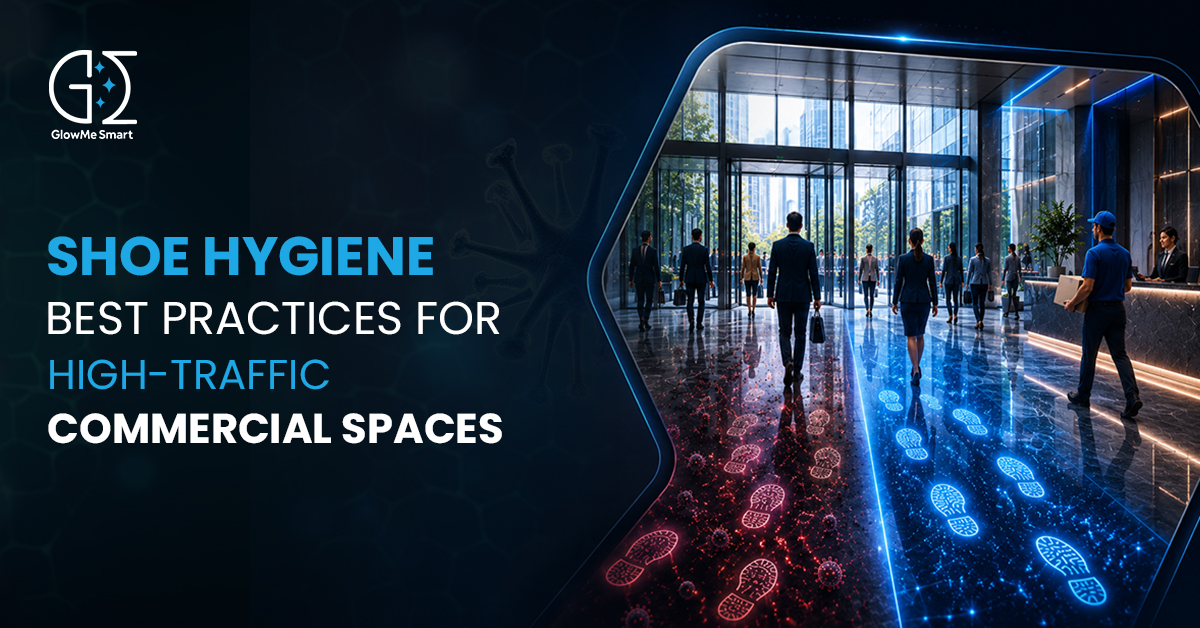
Keeping shoes clean is important. Shoes visit many places. They go to parking lots, restrooms, and elevators. They also visit dining halls and storage rooms. Finally, they reach clean indoor spaces. As workers wash the ground surfaces, every visitor, employee, seller, or guest brings in another pair of shoes. Experts state that busy areas need more washing and germ-killing efforts when many people are present. Many people believe that the Shoe Hygiene Best Practices determine how much people trust the environment. Shoe Hygiene influences public trust in many places.
This includes:
- business rooms
- exercise halls
- medical centers
- hotels
- shopping centers
- factories
- schools
- upscale homes
Because many people move through these areas, Shoe Hygiene serves as a way to protect the health of everyone inside.
Why Do High-Traffic Spaces Need Stronger Shoe Hygiene?
Busy areas see constant movement all day long due to many people. One entrance lets in staff. It also allows access for sellers, visitors, and sanitation workers. Footwear picks up many things before entering indoor spaces.
- Constant movement: Busy areas see constant movement all day long due to many people.
- One entrance: One entrance lets in staff, sellers, visitors, and sanitation workers.
- Footwear picks up: Footwear collects dirt from the ground, rainwater, dust, wet soil, dropped food, restroom surfaces, and parking areas.
- Indoor spaces: Outdoor dirt and rainwater are carried by footwear into the internal rooms, even though the interiors are meant to be controlled.
- High-traffic spaces: High-traffic spaces suffer from the debris that the constant movement of people brings.
Routine sanitation of the ground helps, but it only works after waste has entered the building. Shoe hygiene works better when you take action earlier. It tackles the issue right when you move.
- More effective barrier: It has been observed that shoe hygiene provides a more effective barrier against contamination.
- High occupancy: Locations with high occupancy need clear entry rules.
- Ground sanitation: They also require ground sanitation, footwear treatment, moisture removal, and smell management.
- Instructions: There should be instructions for everyone using the building.
- Priority: Priority is given to shoe hygiene to maintain cleanliness.
What Are the Most Important Shoe Hygiene Best Practices?
A practical shoe hygiene routine should be easy to follow and visible enough for people to trust. It should not depend only on staff reminders or occasional deep cleaning.
- Entry zoning: Create clear transition points between outdoor movement and cleaner indoor facility areas before entry.
- Floor schedule: Clean high-movement floors more often during peak visitor, employee, vendor, and shift hours.
- Shoe treatment: Use structured shoe disinfection before entry into sensitive, premium, or controlled interior areas.
- Drying control: Prevent wet footwear from carrying moisture, odour, stains, and visible marks during entry.
- User guidance: Place simple signs near kiosks, entries, locker zones, and staff movement points for use.
- Staff routine: Train housekeeping teams to check kiosk use, floor condition, and refill needs daily.
How Does Automated Shoe Disinfection Improve Facility Hygiene?
Many organizations use Automated Shoe Disinfection. This helps them avoid manual fabric cleaning, substance-infused mats, or worker spraying. Footwear is placed into a controlled chamber because the shoe disinfection kiosk provides a cycle that stays the same every time.
This equipment includes:
- UV-C
- Ozone
- Steam treatment
- Aroma removal
- Heated atmosphere drying
- Thermal reduction
Many think Automated Shoe Disinfection makes daily cleaning in the workplace easier.
Uniformity of results remains the primary benefit. The shoe disinfection kiosk does not move too fast during busy times or rely on a person to clean every pair by hand. Sanitary conditions are maintained without slowing movement because the shoe disinfection kiosk is placed near the entrance. It has been observed that Automated Shoe Disinfection performs more reliably than manual labor.
- Repeatable process: Each person gets a consistent cycle. This helps cut down errors from quick manual cleaning.
- Lower staff load: Staff can skip repeated spraying and manual fabric cleaning when the building is busy.
- Visible hygiene: Guests can see that the workplace cares about clean footwear before entering shared spaces. Experts claim that visible tools increase trust.
- Better odour control: Aroma removal and heated air drying cut down on bad smells from wet shoes.
Clean footwear before reaching lobbies, studios, medical wards, work areas, or corridors.
Is UV Disinfection Technology Useful for Shoes?
UV Disinfection Technology works well when used correctly in a controlled shoe chamber. UV Disinfection Technology works inside a machine, making it easy to clean footwear. When light reaches the open areas, UV-C assists in washing the surface. Experts claim that UV-C functions most effectively when the light stays on the surface for a long duration. The inactivation of microorganisms is achieved by UV-C, according to descriptions from the CDC. While this information is true, the FDA provides warnings because direct UV-C exposure can cause injury to skin and eyes. Therefore, the operation of UV-C inside an enclosed area is necessary.
Footwear items do not possess flat surfaces. These footwear items have bottom pieces, small lines, sewing marks, internal fabric, and hidden corners. UV-C performs with higher quality when UV-C is included in a cleaning cycle that is much wider. It has been observed that ozone can travel into small openings inside the footwear items. Because steam treatment is utilized, the touching of different material zones is supported. Many people believe that warm air drying is helpful because it stops dampness. UV Disinfection Technology must be combined with these methods because UV-C might not reach the deep parts of the grooves.
Which Businesses Benefit Most From Smart Shoe Hygiene?
The Benefits of Smart Shoe Hygiene Solutions become clear where footwear hygiene affects cleanliness, comfort, or brand experience. A dirty entry point can make even a premium facility look poorly managed. A structured shoe hygiene system gives managers a better way to control movement.
- Gyms: Protect workout floors, studios, locker rooms, and equipment areas from repeated shoe movement daily.
- Hospitals: Support cleaner movement across staff entrances, visitor zones, support areas, and waiting spaces daily.
- Hotels: Improve arrival hygiene near spas, corridors, staff entries, valet points, and guest areas daily.
- Offices: Reduce dirt transfer from parking, public transport, cafeterias, and shared building entrances through daily use.
- Manufacturing units: Control footwear movement near shop floors, canteens, worker zones, and storage areas daily.
- Schools: Reduce outdoor dirt transfer from buses, playgrounds, corridors, and classroom entry points through daily movement.
- Luxury residences: Support cleaner lobbies, clubhouses, gyms, indoor courts, and shared amenity zones for daily movement.
Why Choose GlowMe Smart for Shoe Hygiene in India?
Businesses searching for the Best shoe disinfection kiosks in India should look beyond machine appearance. The right system must suit daily footfall, Indian dust, monsoon moisture, heat, staff pressure, and space limits.
GlowMe Smart builds StepTron for commercial shoe hygiene, where footwear enters busy spaces daily. The kiosk supports UV-C, ozone, steam treatment, deodorisation, 360-degree warm air drying, and active cooling. It helps facilities create a visible hygiene checkpoint without depending on manual cleaning for every user.
GlowMe Smart exists to make hygiene easier to repeat in real commercial conditions. StepTron supports cleaner entry points, stronger user confidence, better presentation, and practical hygiene management.
Ready to improve footwear hygiene? Contact GlowMe Smart to explore automated shoe disinfection kiosks for high-traffic commercial spaces across India.
FAQs
1. What are shoe hygiene best practices for commercial spaces?
They include entry zoning, floor cleaning, shoe disinfection, drying control, user guidance, and staff checks.
2. How does automated shoe disinfection work?
It uses a kiosk cycle with UV-C, ozone, steam, deodorisation, drying, and cooling.
3. What are the benefits of smart shoe hygiene solutions?
They improve visible hygiene, reduce manual effort, control odour, and protect cleaner indoor areas.
4. Is UV disinfection technology safe for shoes?
It is safer when UV-C operates inside an enclosed chamber, preventing direct user exposure.
5. Which locations should install shoe disinfection kiosks?
Gyms, hospitals, hotels, offices, factories, schools, malls, airports, and premium residences.
6. Why choose GlowMe Smart for shoe hygiene?
GlowMe Smart provides StepTron kiosks for Indian facilities needing visible, repeatable, dry shoe hygiene.
