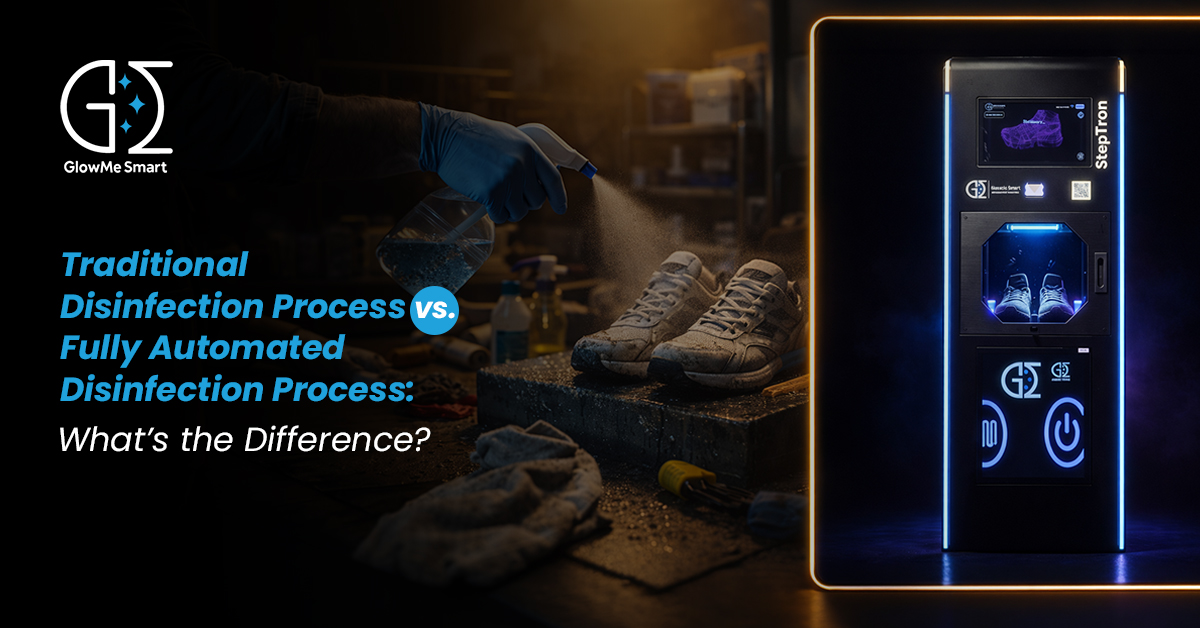
The key distinction between manual cleaning and automated disinfection is uniformity, speed, and the level of cleanliness achieved. In manual procedures, visible dirt is eliminated by human work and liquid solutions, whereas full automated disinfection systems eliminate microscopic pathogens through the use of programmed machines such as UV-C light and ozone, without a touch of human labor.
Conventional techniques are prone to hidden areas and need a lot of time to dry. Conversely, a machine completing the sterilization and drying process in less than two minutes seems to be provided by an automated hygiene solution provider such as GlowMe Smart.
What is the difference between cleaning and disinfecting?
Cleaning is the actual washing of surfaces with soap or detergents to remove dirt, dust, and organic matter. Disinfection is a chemical or technical action that destroys 99.9 percent of bacteria, viruses, and fungi that cannot be destroyed by cleaning.
Cleaning an object may only make it appear clean, but it does not ensure that it is germ-free. To illustrate, wiping a helmet using a cloth removes the sweat stains but leaves behind the bacteria. A machine such as the GlowMe HelmeTron will keep the object clean to the eye and biologically sterile.
Why is manual cleaning vs automated disinfection a major debate?
The discussion revolves around the issue of human error and machine accuracy. Cleaning manually is subject to the thoroughness of the individual who is doing it, the quality of the rag, and the power of the chemical being used, and thus, the outcome varies.
Due to fully automated disinfection, the human factor is eliminated. This has been made possible by machines such as the GlowMe StepTron, which have 360-degree sensors to treat the whole inch of a shoe. There is no chance that a worker will become tired or not follow a specific step.
How do fully automated disinfection systems work?
These systems utilize advanced UV-C light and ozone gas to penetrate porous surfaces and neutralize harmful pathogens instantly. Users experience a touchless journey that guarantees high safety standards without requiring any manual labor or supervision.
- Sterilization Cycle: High-intensity UV-C lamps eliminate bacteria and viruses from every angle to ensure the item is biologically safe.
- Deep Deodorization: Integrated ozone technology removes foul smells from gear like helmets and shoes to provide a fresh user experience.
- Moisture Removal: Internal warm air circulation systems dry the equipment quickly so that the user can wear it immediately.
- Smart Connectivity: IoT-enabled sensors track every disinfection cycle and provide real-time data to the business owner for better management.
Modern businesses benefit from these self-operating kiosks because they provide consistent results every single hour of the day. Every cycle managed by GlowMe Smart ensures that high-quality hygiene remains accessible to the general public.
What are the standard industrial disinfection solutions?
Industrial settings require heavy-duty tools that can handle constant use in high-traffic areas like transit hubs and factories. These solutions move beyond simple sprays to include specialized kiosks designed for specific types of personal gear.
- Helmet Sanitization: Specialized chambers clean the interior foam of headgear where sweat and bacteria usually accumulate during long daily commutes.
- Footwear Hygiene: High-capacity machines treat the soles and sides of shoes to prevent cross-contamination in medical or food environments.
- Device Protection: Small item kiosks sanitize phones and wallets using dry methods that do not damage sensitive electronic internal components.
- Surface Treatment: Automated misters apply thin layers of disinfectant across wide areas to maintain a sterile atmosphere for all workers.
Maintaining a sterile environment is simple when you integrate professional commercial hygiene systems into your daily facility operations. Utilizing a GlowMe Smart machine allows your staff to focus on core tasks while hygiene remains automated.
Why is cleaning vs disinfection in industries changing?
Industries are shifting toward automation because manual logs are often inaccurate, and labor costs continue to rise significantly. Verifiable hygiene standards are now a requirement for safety compliance in most professional and commercial business sectors.
- Data Verification: Automated systems record every single use and provide digital proof that the disinfection process was actually completed.
- Labor Efficiency: Staff members no longer need to spend hours scrubbing equipment when a machine can do it much faster.
- Chemical Safety: Closed systems prevent employees from touching harsh cleaning liquids and breathing in toxic fumes during the workday.
- Public Trust: Visible high-tech kiosks show customers that a business is invested in modern technology and their personal health.
The transition to touchless disinfection technology is essential for companies that want to lead in safety and operational excellence. Choosing GlowMe Smart ensures your business meets the highest possible standards for modern urban cleanliness and health.
Comparison: Manual Cleaning vs Automated Disinfection
| Feature | Manual Cleaning | Automated Disinfection (GlowMe Smart) |
| Consistency | Low; it depends on the individual worker. | High follows a programmed software cycle. |
| Time Required | 10–20 minutes (including drying). | 60–120 seconds. |
| Contact Level | High; requires touching the object. | Zero; touchless disinfection technology. |
| Drying Time | Requires air drying or towel drying. | Integrated warm-air drying system. |
| Pathogen Kill Rate | Variable; often leaves bacteria behind. | 99.9% (including viruses and fungi). |
Table 1 above provides a direct comparison between traditional labor-intensive methods and modern engineering solutions for workplace hygiene.
How to Choose Between Manual and Automated Hygiene?
Selecting the right disinfection strategy depends on your business’s foot traffic and the level of hygiene you want to provide for your customers and staff. Manual cleaning is useful for removing basic debris, but it fails to provide the consistent, high-level sterilization required in modern high-hygiene environments.
- Operational Consistency: Automated systems follow a programmed software cycle that eliminates the risk of human error in every disinfection round.
- Speed and Throughput: Machines complete deep sterilization in under two minutes, which is essential for busy transit hubs and office receptions.
- Sustainability Goals: Using precise amounts of energy and refillable solutions reduces the physical waste generated by disposable wipes and plastic bottles.
- Verifiable Standards: Digital logs provide proof of sanitization, which helps businesses maintain strict safety compliance and build lasting public trust.
The transition to touchless disinfection technology is the most effective way to protect personal gear and electronics without causing any damage. Integrating a solution from GlowMe Smart ensures that your facility stays ahead of the curve while providing a safe, odor-free experience for everyone who walks through your doors.
Ready to upgrade your hygiene standards? Talk to our team today to bring automated disinfection technology to your business location.
FAQs
1. Is automated disinfection safe for electronics?
Yes. Machines like the ObjecTron use UV-C light and controlled cycles, avoiding excessive moisture or heat. This makes them safe for smartphones, tablets, and car keys.
2. Does automated disinfection replace janitorial staff?
No. It assists them. Janitorial staff focus on general facility cleaning, while automated machines handle the deep disinfection of specific items that are difficult to clean manually.
3. How often do the machines need to be refilled?
This depends on usage volume. Most GlowMe Smart kiosks are designed for high traffic and only require a quick refill of the PureLine disinfectant solution after hundreds of cycles.
4. Does UV-C light kill all types of germs?
UV-C light is scientifically proven to deactivate the DNA of bacteria and viruses. When combined with ozone and steam, as seen in GlowMe products, it provides a comprehensive kill rate.
5. What is the difference between traditional and automated disinfection?
Traditional disinfection relies on manual cleaning methods, while fully automated disinfection uses advanced technologies like UV or electrostatic systems for consistent coverage and efficiency.